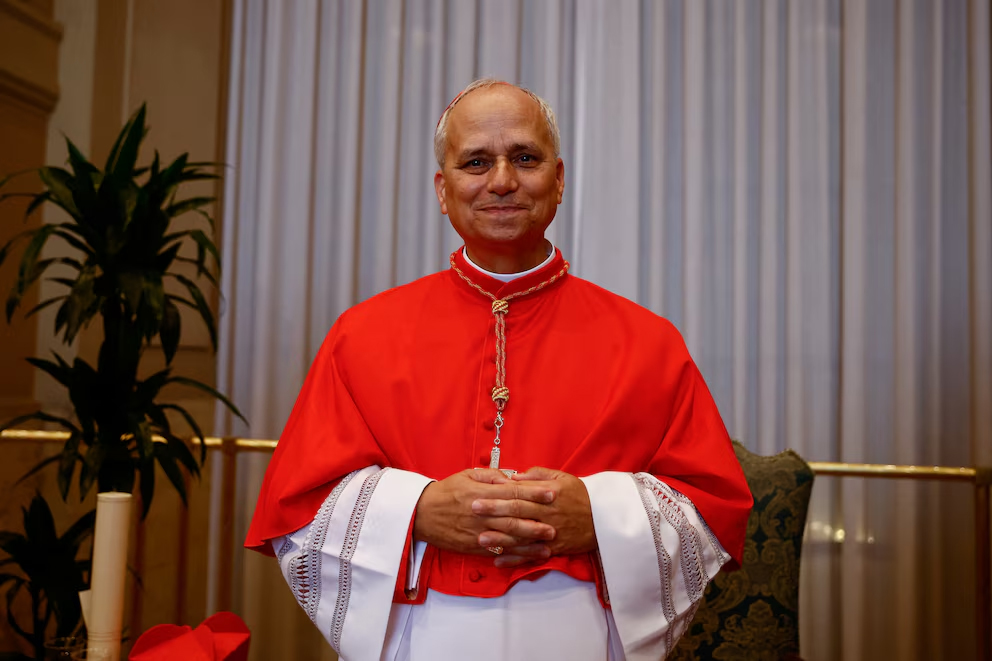
Since
Robert Francis Prevost was elected
Pope Leo XIV , many have wondered not only what changes his pontificate might bring, but also curious details about his daily life. And one of the most repeated questions on social media and in the media has been:
How much money does the Pope really make?

Although he is one of the most influential figures on the planet, with both spiritual and diplomatic power , the answer is far from what many might imagine. Unlike senior executives or world leaders who receive large monthly salaries, the Pope does not receive a traditional salary . Instead, he lives with all his expenses covered by the Vatican , including his residence, food, and transportation, as well as medical care and security.
In fact, if a symbolic allowance were taken as a reference, some estimates suggest that the pontiff could receive the equivalent of around 2,500 euros per month . However, this figure does not represent a salary in the strict sense, but rather a form of symbolic stipend . And in practice, he is not paid a direct salary , as his needs are fully covered by the Vatican State, the smallest country in the world.
This austere lifestyle is nothing new. Pope Francis , Leo XIV’s predecessor, also opted for a life of simplicity throughout his pontificate. He rejected living in the Apostolic Palace and chose to stay in a more modest residence within the Vatican: the Domus Sanctae Marthae . He was also known for choices that reflected his desire to reject luxury. One such example was when he received a Lamborghini Huracán as a gift in 2017 and decided to auction it off to donate the money to charitable causes .
Leo XIV appears to be following a very similar path. Known for his pastoral vocation and his closeness to the most needy, he is likely to maintain that approach of humility and service . And although he could technically access a wealth of resources, he is expected to continue prioritizing social and spiritual commitment over economic interests.
However, it’s important to clarify that, although the Pope doesn’t accumulate personal wealth, he doesn’t live in precarious conditions. Access to elegant residences , high-end vehicles , specialized medical equipment , and international security protocols are part of the pontiff’s daily routine. Furthermore, he has logistical and human resources at his disposal that allow him to carry out his mission as leader of more than a billion Catholics around the world.
It is estimated that during his papacy, Francis managed an estate of approximately $12 million , although this figure does not represent personal wealth but rather a reflection of the value of the services, goods, and resources to which he has access to carry out his work. Many of these funds are used for charitable works, the maintenance of religious institutions, and humanitarian aid , rather than for the Pope’s personal enjoyment.
The Vatican’s finances are supported primarily by donations from the faithful, tourism revenue, and profits generated by the Vatican Museums . One of the most notable contributions is the so-called Peter’s Pence , an annual collection to which Catholics around the world voluntarily contribute. This income alone can exceed $25 million annually , with the United States, Germany, and Italy being the largest donors.
Despite this income, the Vatican is not without financial challenges. In 2023 , an operating deficit of nearly $90 million was reported , leading to salary cuts, especially among senior church officials. This measure was promoted by Pope Francis himself with the goal of improving transparency and reducing spending.
Ultimately, although the Pope has access to significant resources, his lifestyle does not revolve around money , but rather spiritual service . With the arrival of Leo XIV , all indications are that this tradition will continue, reinforcing the idea that the papacy is, above all, a vocation of devotion and not a position of economic privilege.
About the Author