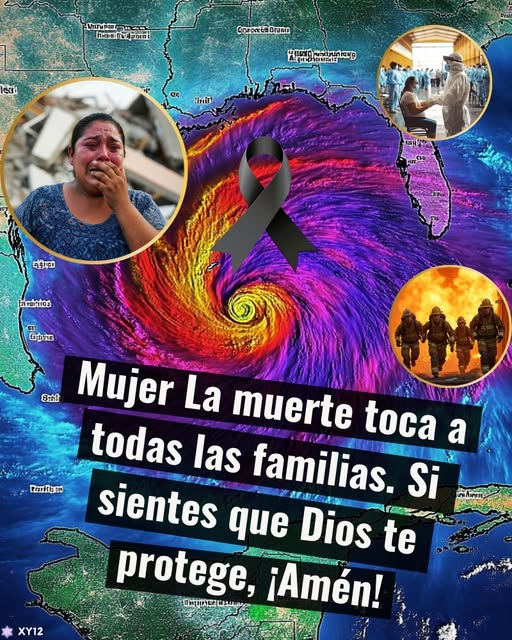

The image shows a satellite map with a gigantic hurricane swirling over the Gulf of Mexico. In the center, a black ribbon—a universal symbol of mourning—rests over the eye of the storm, while three circular scenes surround the composition: a woman weeping in despair, a group of doctors working in a hospital, and firefighters battling a blaze. Amid this dramatic composition is the message: “Woman, death touches every family. If you feel God is protecting you, Amen!” This text, charged with emotion and spirituality, invites reflection on the fragility of life, human suffering, and the strength of faith in the face of adversity
The hurricane in the background symbolizes the uncontrollable force of nature and, by extension, the moments of chaos that erupt in everyone’s life. No one is exempt from storms—whether physical, emotional, or spiritual. Just as a hurricane devastates homes and cities, life can also shake the soul with unexpected losses, illnesses, or tragedies. In this sense, the image not only shows a meteorological disaster but also represents the devastation that death can cause when it touches a family.
The black ribbon in the center is the clearest reminder of the mourning that we all, sooner or later, face. “Death touches every family” is not a pessimistic phrase but an unavoidable truth. It acknowledges the universality of human suffering: loss does not distinguish age, class, or condition. However, the message does not dwell on sadness but points to a higher dimension: divine protection and comfort. To say “If you feel that God is protecting you, Amen!” is an affirmation of faith in the face of the inevitable, a gesture of trust in the midst of pain
The figure of the woman in the text and the image has profound symbolic value. She represents emotional strength, unconditional love, and resilience. The weeping woman is not only a victim of grief but also a mirror of all humanity: we have all, at some point, felt that helplessness in the face of loss. But the phrase speaks directly to her, reminding her that, even in the midst of tears, God remains her refuge. Her faith is the anchor that allows her to stand firm when everything seems to be falling apart.
The other elements—the doctors and firefighters —represent those who fight against death every day. They are symbols of hope and service, reminding us that, even in the midst of chaos, there are human hands guided by love and the vocation to save lives. In a more spiritual context, they can also be seen as instruments of God, who, through their work and sacrifice, embody the divine presence on earth.
Finally, the call to say “Amen!” at the end of the message is not a closing of resignation, but an affirmation of faith. It means accepting that death is part of the cycle of life, but also believing that God offers comfort, strength, and protection to those who trust in Him. The image, therefore, is a mixture of tragedy and hope, a reminder that although death is an inevitable visit, faith can transform fear into peace, and pain into a deep certainty of eternal love.
About the Author